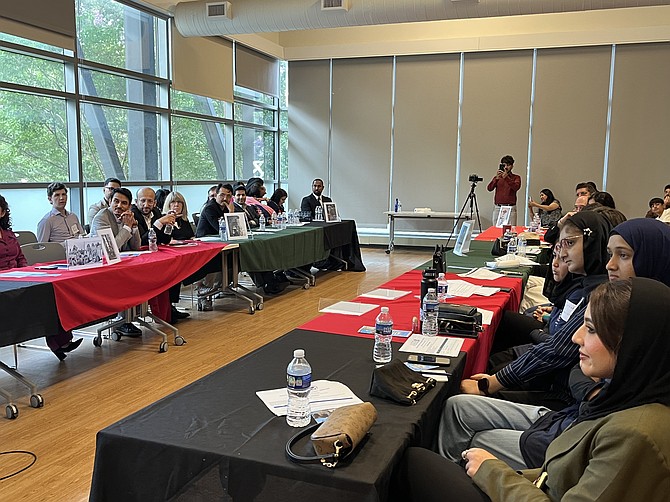
On Aug. 15, 2026, the Afghanistan Refugee Rescue Organization (ARRO‑USA) hosted a conference titled “Remembrance, Truth, Solidarity and Action” at the North County Governmental Center in Reston. The event — one of several held nationwide on the fifth anniversary of the fall of Kabul — brought together evacuees, local officials, and advocates to confront ongoing resettlement hurdles following emergency airlifts to nearby Dulles International Airport.
The conference mixed gratitude with frustration. Afghan diplomats, educators, and service providers praised
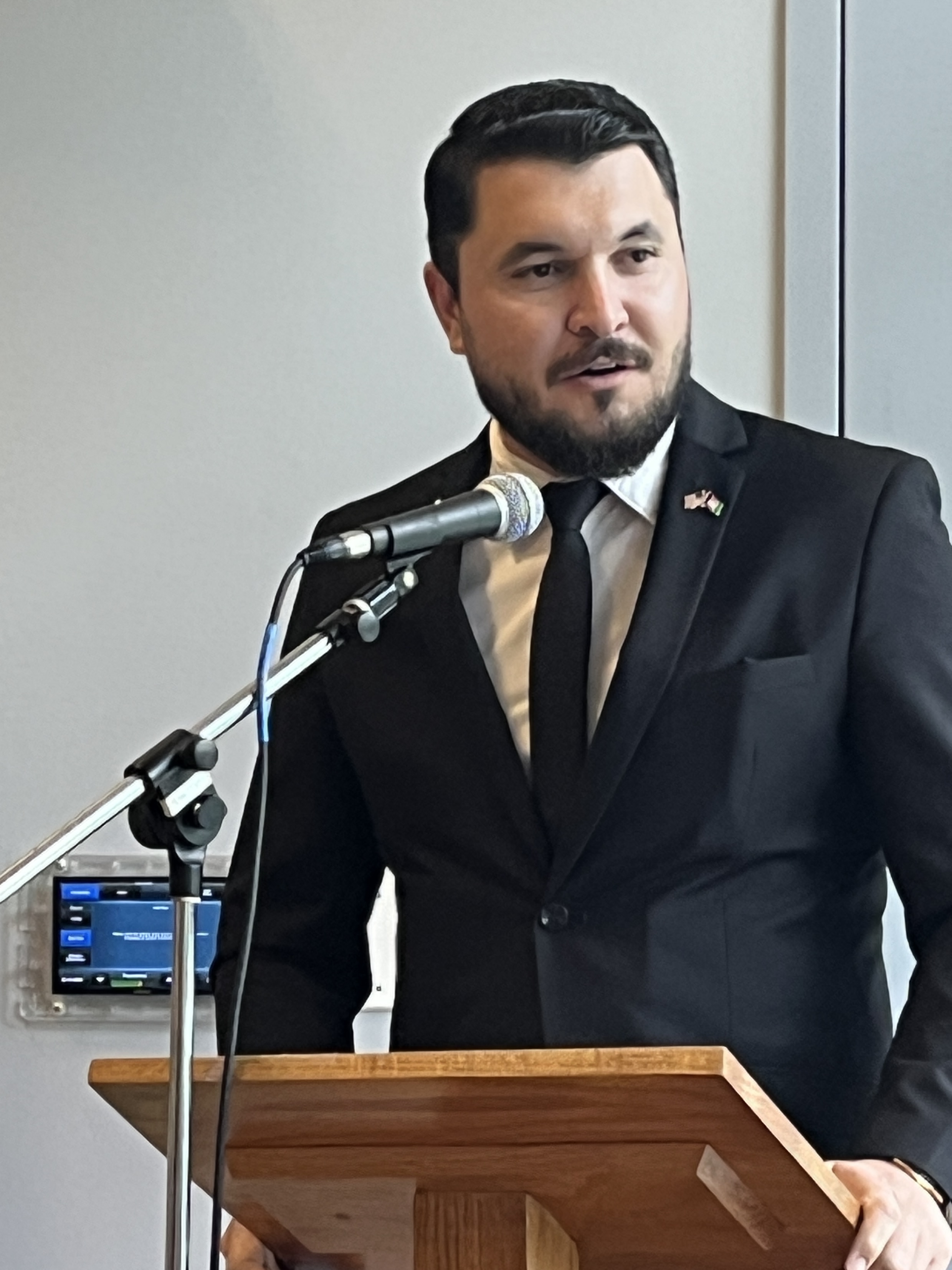 Mohammad Iqbal Najm speaks on the skills, contributions, and achievements of Afghans in American society during the ARRO-USA conference in Reston, Virginia, on Saturday, Aug. 15, 2026.
the welcome they received in Northern Virginia, but warned that failed federal programs, short‑term funding, and deep language and literacy gaps have left many families stuck in legal and economic limbo long after the last planes left Kabul.
Broken Promises and Evacuation Gaps
“[The] American people opened their hearts and doors for us,” said Abdullah, who identified himself as a former Afghan diplomat from the northern parts of Afghanistan. He expressed his gratitude but also spoke candidly about the collapse of his home province and the sudden loss of support. “One of the things that I never forget was the fall of my province. I cried for almost 30 to 35 minutes because everything we had achieved … was evaporating in just a moment.”
Abdullah warned that the collapse taught Afghans a hard lesson about international commitments: “When you open your eyes, the people who promised you for 20 years that ‘we will stand behind you’... they will be gone.”
Addressing the failures of existing pathways, Shawn VanDiver, founder and president of AfghanEvac, called for replacing ad‑hoc evacuations with a standing, conflict‑agnostic “mission partners” system that would begin tracking and vetting local allies as soon as they work with the United States or coalition forces. “The SIV program has been a failure. The refugee program has been a failure,” VanDiver said. “All of this has been a failure that was working until it got shut off, and we need to take this opportunity to refine.”
Compounded Educational Barriers
Beyond emergency evacuations, basic integration remains steep. Under Taliban rule, female education above sixth grade remains banned — a reality that UN Secretary-General António Guterres has repeatedly noted in official statements. Afghanistan stands alone as the only country in the world to bar girls from secondary and higher education, he says..
“Women are banned from everywhere — from home, from school, from work, from public, from participation,” said open‑forum moderator Lima Anwari.
Local Realities in Fairfax County
With over 30% of its 1.1 million residents foreign‑born, Fairfax County serves as the primary regional hub for Afghan resettlement in the Washington area. Yet local infrastructure struggles to match long‑term needs. Initial federal stipends cover only 30-to-90 days of assistance, a brief window in a county where market‑rate rents frequently top $2,000 per month.
“One of the most common misunderstandings is that the journey of a refugee ends upon arrival,” said Meena Khalil, a local practitioner working daily with newly arrived families. “The reality is very different. The journey begins upon arrival.”
Dr. Susan Antolin, executive director of Women for Afghan Women, noted that short‑term funding fails to account for language barriers and digital literacy. She explained that six- or 12-month programs cannot realistically overcome the language and digital‑literacy gaps Afghan women face when reading government letters or supporting their children in school. “It takes much more than that, and it requires a lot more resources than that,” she said, adding that “the digital literacy part is also missing.”
Khalil stressed that access does not equal trust: “Just having those doors open does not mean that people will walk through them.”
Moving From Vulnerability to Capability
Looking ahead, Dr. Mohammad Mirwais Balkhi, former Afghan minister of education, urged a pivot toward self‑reliance. “We have to run from vulnerability to capabilities,” Balkhi said, emphasizing vocational and technical education.
Reaffirming ongoing support, Kris Adkison, representing U.S. Rep. James Walkinshaw, promised continued partnership with the diaspora: “In the years since the fall of Kabul, many Afghan families have rebuilt their lives and established new roots here in Fairfax County. Five years later, our responsibility to the Afghan people continues. ... I look forward to continuing to work alongside Virginia's Afghan American community and ensuring their voices and contributions remain an important part of our shared future.”
Following the panel, Supervisor Walter Alcorn approached Dr. Balkhi, shook his hand and said: “Tell me what I can do to help.”
Economic and Housing Pressures
* Initial resettlement support: Federal stipends typically last 30–90 days.
* Rents: Market‑rate apartments in Fairfax County frequently exceed $2,000 per month, leaving nonprofits and local governments to fill long‑term gaps.
Systemic Gaps Highlighted at the Conference
* Visa Pathways: The Special Immigrant Visa and refugee programs have been “a failure,” said AfghanEvac founder Shawn VanDiver, who called for a permanent “mission partners” system.
* Language & Literacy:
* Women expected to learn English in 6–12‑month programs and manage official correspondence “need much more” time and support, said Dr. Susan Antolin.
* Some teens approach graduation without the ability to read and write, Altman warned.